


New Poster ⚡

29. Introduction
Salutations to our subscribers!
Today I thought of writing about a topic that might seem futile for some but quite interesting for others.
Gaming though, is as much a lifestyle as any other.
There is a little less stigma around it nowadays but when younger, it was a straightforward motive for being made fun of: bullying.
It is usually said that video games are for children - that's an understatement, like saying World War II was a minor disagreement.
It is also usually said that video games are a waste of time. - that's bollocks, it's like saying drinking alcohol is NOT a waste of kidney. (lol.)
Alpha, bravo, charlie, delta, echo, foxtrot, golf, hotel… the only true reason behind the fact that I can spell the NATO phonetic alphabet is the countless amount of time I spent playing shooter games.
In fact, back in my teenage years, I didn't just play shooter games, I made some history.
Imagine this - you are scrolling your TikTok feed one day and suddenly find a video of yourself with your squad from many many years ago, in a viral post about the nostalgia of… Call of Duty.
And you think...
“Hey, that's my nickname. Wait, that's my bro from old times Salada… THAT'S THE WHOLE SQUAD! What the heck? Pure nostalgia overdose.”
The true thing about video games is that underneath their ingenious surface, they hide an efficient tool for not only artistic inspiration but also intellectual and technical development because they are more than anything, simulators.
When we think about it, astronauts, pilots, military personnel and many other professions require training in simulators to train qualified professionals.
In 2024, the defence secretary of the UK issued a public calling for gamers.
If you're a gamer - your country needs you, says Healey as he seeks more cyber recruits. Mr Healey told the paper that people who play Call of Duty in their bedrooms could be the ideal new recruit for drone warfare.
Such an event was a very important point of convergence where gaming became a useful skillset also in the military.
The entertainment landscape is also undergoing a dramatic transformation, with electronic sports (e-sports) witnessing an unprecedented surge in competitive prize pools. 2024 marked a pivotal moment, revealing the most substantial financial reward in competitive gaming history.
We are proud to announce an unprecedented total prize pool of more than $60 million for the inaugural Esports World Cup this summer in Riyadh, Saudi Arabia.
And so, what was once child play is becoming serious business.
Single-player games, crafted for a deep storytelling experience are already at the same level of production costs as movies like Titanic.
In March 2026, Bloomberg's Jason Schreier said the numbers floating around AAA game dev these days are $300 million or more, sometimes much more.
Let's rewind.
My relationship with games is that the keyboard, the mouse and the screen were my true haven while growing up.
I was not aware of my condition back then, but games were the only place where my autism truly felt comfortable.
The low-pressure social environment (my cave), structured levels and game mechanics became my obsession because they completely differed from real life in one essential aspect - I felt in control. In contrast, in real life, the unpredictability was massively staggering.
I felt like an analog car radio receiving transmission of all stations at once. Like having a hyper awareness that tries to identify and make sense of all patterns I could see or hear around me.
Most social interactions felt like torture. I never knew how to act or what to say, and I couldn't bring myself to care about common topics or small talk, so I was always stuck choosing between making the room awkward and staying completely silent.
Whereas in games, the patterns were much more predictable, including, of course, my opponents or the machine.
And so, as a teenager, I found myself a job: transforming pixels into pathways of learning and fun. 😎
For every different game that I tried, a new logical system was learned, a new set of rules was understood and a whole new set of challenges were beaten.
Single-player and indie games provided me with many narratives, artistic references and relentless fun, but the multiplayer games helped me find the athlete in me.
There was something about pushing my limits to conquer my own trophies that made me feel worthy. I always believed that the virtual scenario was a cool place to acknowledge and develop my determination in life.
The limits I pushed there became my benchmark for how much I could accomplish through sheer determination in real life.
It always shared many skills with functions we got to employ in the real world, in a game like Call of Duty - reflexes, movement, strategy, communication, teamwork and leadership are fundamental for success (or the top position on a leaderboard).
And yet people still think gaming is a waste of time.
If there’s one thing I’d say about that, it’s this: I’ve noticed a pattern. Adults who never make deliberate room for play, in any form or activity, tend to develop dysfunctional and toxic behavior.
They turn their relationships with family, friends and coworkers into competitions, fueled by jealousy, envy and all the petty feelings that grow when people have nothing meaningful to do with their free time.
Gaming can, of course, become an addictive habit. Adults should play in moderation, and kids need discipline, but that doesn't erase its benefits.
29.1 Blood Brothers
And the first brand I ever made.
Video games and my professional life are deeply intertwined.
I started learning Photoshop because I wanted to be part of the gaming communities on Orkut.
Orkut worked a lot like a forum, and it was trendy to add image signatures to your posts and comments.
Those “HTML signatures” became the first kind of media I ever designed.
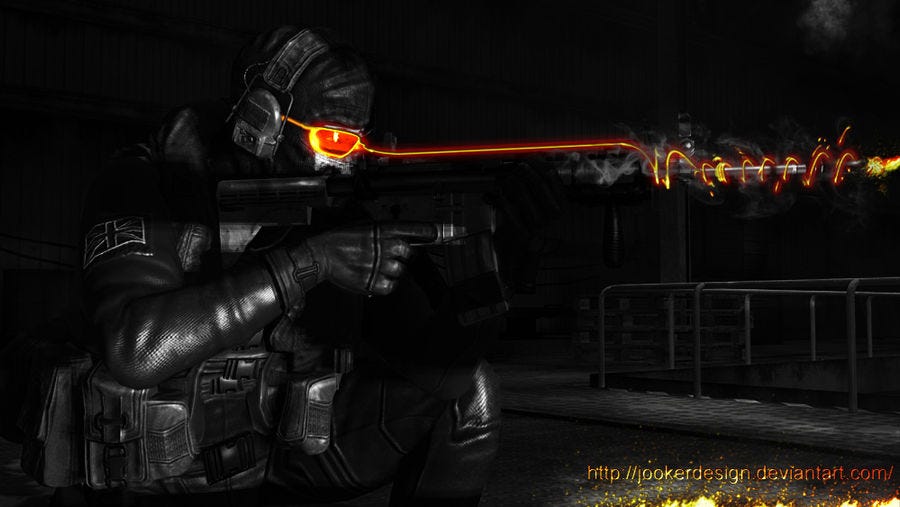
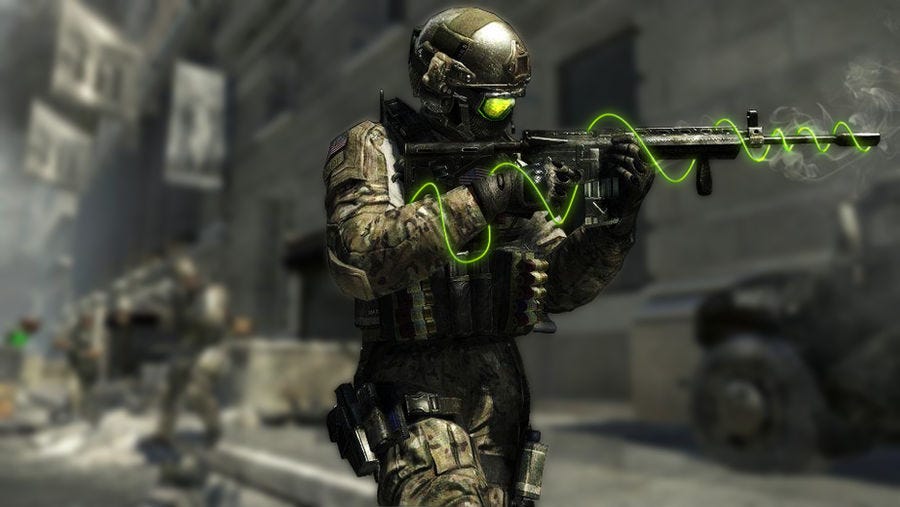
Eventually, I moved on to making wallpapers for my favorite bands, TV shows and other things I loved, a kind of fan art tribute to everything that had shaped me.
The shy artist in me experimented with free ideas every now and then, but my brush only truly became an artistic tool many years into my professional career.


There was one turning point in those teenage years, though, whose importance I only understood much later.
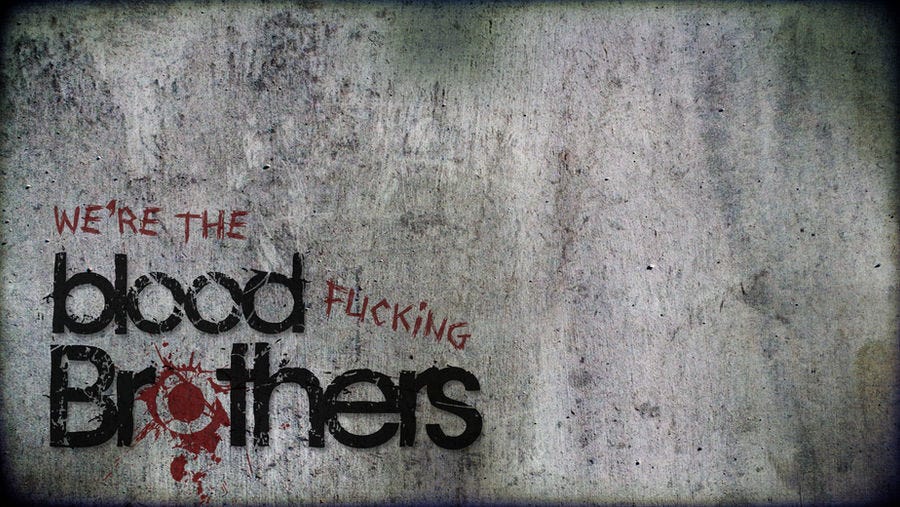
When I immersed myself in the community of one game in particular, Call of Duty: Modern Warfare 2, my gift for leadership started to show, and I ended up leading a clan: a bunch of toxic, explosive dudes dripping with determination to be the best.
Imagine this: you’re about 15 years old, and more than a dozen maniacs, some older than you, some younger, answer to your authority.
Why? Because you’re the founding father boy of that team digital family.
You’d assume there was something in it for them: some immediate benefit, maybe even a fee to get in.
The truth is simpler, and stranger. People just wanted in. The demand for being a Blood Brothers was completely organic.
Recruitment usually started with rivalry, and sometimes with admiration.
Players couldn’t accept that I kept finishing at the top of the scoreboard, or that they kept losing every time we faced off. So they found ways to explain it: they called me a cheater, or they taunted me in every way you can possibly imagine.
My buddha skills were developed in the crib hehe.
I never took the bait. I knew my skill was legit, so the only thing to do was keep playing and try to turn their anger into fun. After all, that’s why we were all there.
Eventually, they got tired of being outplayed by The Jooker and his crew. Or they simply had an epiphany: these guys are cool. Either way, they asked to join.
I also actively scouted for skilled players, monitoring their performance and sportsmanship across matches and approaching the most promising ones with an invitation to join the team.

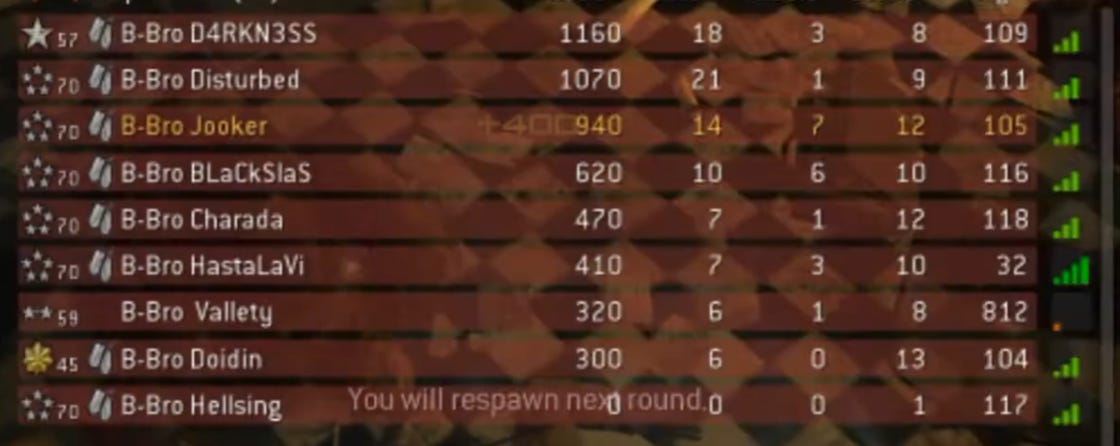
There was really only one rule: respect each other and don’t cheat. Break it, and you got kicked out.
Just from their nicknames, you can imagine how chaotic and fun our voice chats were. It was a golden age for online gaming, and we were all having the time of our lives.
High school? I never failed a single year, but I slept through half of it so I could game all night.
Eventually, my parents gave up trying to discipline me. Not that they could complain much: my grades were always above average. I just wasn’t looking to impress anyone in an institution full of protocols even though I didn’t even knew what these words meant back then.
That’s where I first found my calling as a leader: in online gaming.
It was the first place I ever had to manage people. A dozen teenagers with big egos, short tempers and very different personalities, all looking to me to keep the team together or most importantly: bring the victory home.
I had to settle fights, build strategies, assign roles and keep everyone motivated after a losing streak. I learned when to push, when to listen and when to just let people have fun.
I developed this almost sinister skill of reading the room and bending it to my team’s will, like a DJ who knows his crowd so well he can move them with a single track.
And when the team’s effort wasn’t enough, I usually pulled off a miracle.
Sometimes that meant clutching the final kills at the pivotal moment. Other times... it meant taunting the other team in the text chat until I got inside their heads.
Don’t get me wrong: taunting is part of plenty of sports. In the right dose, it makes the game more interesting.
Staying calm, keeping the team united and lifting morale whenever it dropped: that was the real recipe for winning those matches, and for making sure everyone had fun and felt inspired.
Nobody taught me any of it. I learned by doing, one match at a time.
My time in online gaming peaked with the launch of Overwatch.
I threw myself into it from day one, and history repeated itself with a whole new cast: another community, another team, the same name.
Blood Brothers.
But this time was different. I was already running Sentient and had important clients under my belt, and still, the Overwatch team built so much synergy that we were invited to BGS 2016 in São Paulo.
We were there to compete in the GTX Challenge, Nvidia's Overwatch tournament at the event, with only eight teams in the bracket.
Here's a moment from one of our matches that still gives me chills:
This tournament was a pivotal moment in my life, because it represented an experience I had always dreamt of, at the same time that I was 20 years old and had already developed a career in advertising.
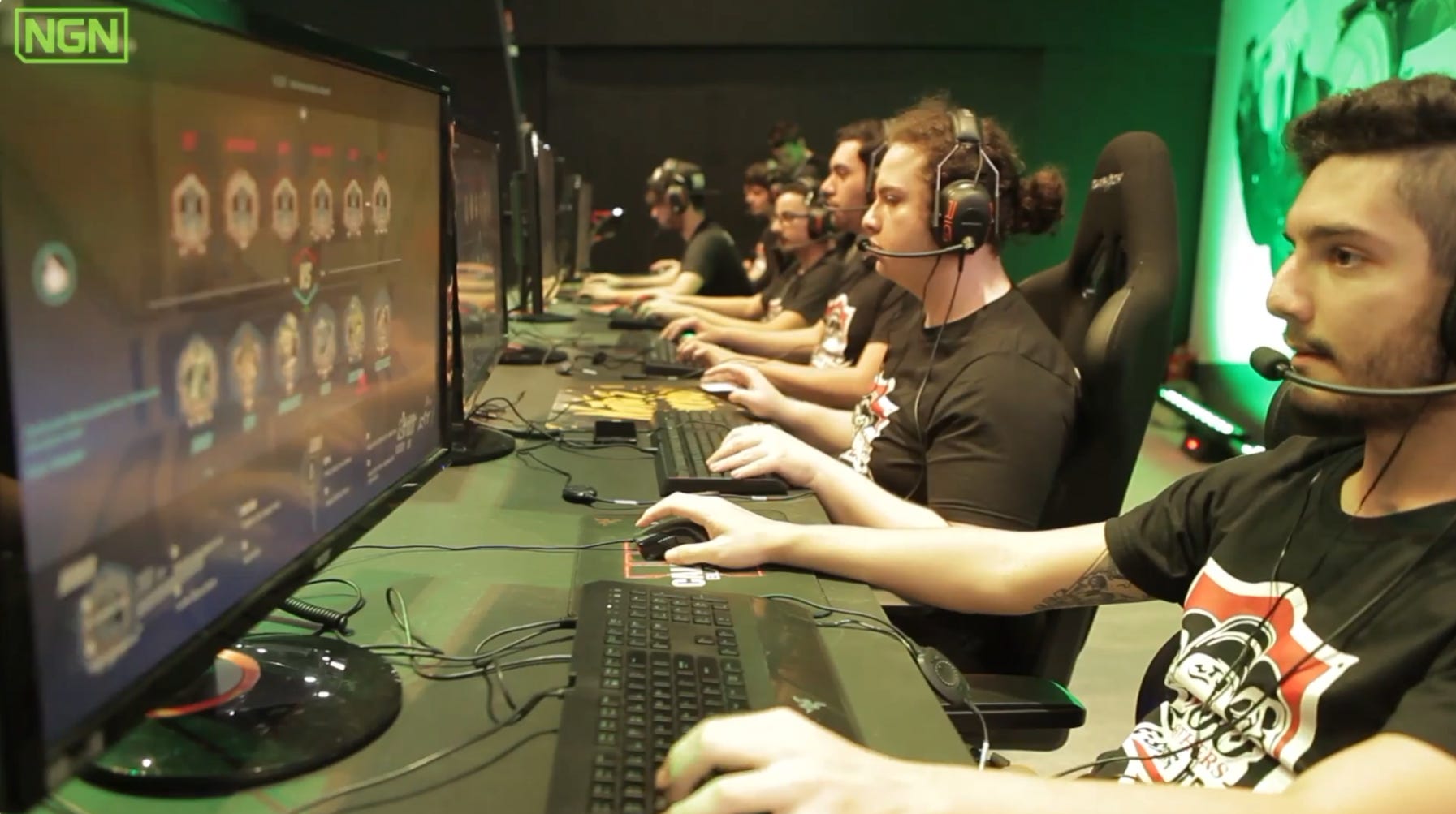
We lost in the very first match. Game over, just like that.
But I walked off that stage knowing I’d given everything I had while competing against actual professional e-athletes.
And having felt a whole different kind of thrill: that of an e-athlete.
On the way home, I started thinking hard about which path I really wanted to take in life.
I wasn't really upset about losing. But I knew I couldn't keep living two lives that were so different, one as a gamer and one as a creative professional.
Somewhere along that road, I realized something: if I turned gaming, my greatest source of fun, into a job, it would never feel the same again.
So I put competitive games aside and focused on building Sentient.
29.2 Jooker?
“Why so serious?” or “So serious you can only wonder why”
I was about 12 years old when I picked “Jooker” as my nickname.
Music: The Joker and the Thief - Wolfmother
I was drawn to the Joker the way a lot of rebel kids are drawn to villains. He didn’t play by anyone’s rules. He was unpredictable, always the smartest person in the room, and he laughed at everything everyone else took seriously.
For an autistic kid who never quite fit the social script, there was something freeing about a character who didn’t even try, I just added an extra “o” to make it mine.
And that additional letter became a perfect representation of the play style I developed.
“Jooker” sounds almost exactly like “juker.” In gaming slang, a juker is someone who fakes out opponents with unpredictable moves. The term comes from American football, where to “juke” means to trick a defender with a sudden feint or change of direction, leaving them grabbing at empty air.
And there’s another, older “juke,” the one in jukebox and juke joint. It comes from Gullah, a creole language of the American South, where joog meant “wicked” or “disorderly.” Juke joints were rowdy little bars where people went to drink, dance and forget their troubles, which sums up my vibe in any match: turn up the music and make the whole lobby groove.
Unpredictable, deceptive, a little bit wicked, with a soundtrack to match. I couldn't have picked a better name if I'd tried. Little Thi already had good taste a long time ago.
Don't worry, though. My wickedness stays on the field, where there are rules, referees and a final whistle. Once the match is over, the Jooker logs off.
Unless, of course, you're one of those seriously retarded people who turn real life into a competition and decide to start some dumb real life match with me.
In that case, you’re fucking cooked and I recommend an immediate forfeit.
By the time you make your first move, I’ve already been setting up the board for years.
The real-life kind is the one game I take seriously.
Because just like in sports, real life has rules. And there's no place in it for backstabbing, injustice or hurting people for fun.
Play dirty with me, or with anyone in front of me, and you become the joke, mate.
I never tell the punchline. I just wait for you to come and check.
29.3 The Miracle of SEO
How I Made My Name Where Only Sharks Survive
Have you ever heard the phrase “Touch not mine anointed”? It comes from Psalm 105:15.
People who don’t truly believe in God might assume that if there’s no God, there’s no such thing as anointed people. Fair enough.
I eventually came up with another phrase in my line of work: “Anoint not what is wicked.”
Let me tell you something. Believe it if you want, doubt it if you can.
With 13 years of marketing experience under my belt, I can make almost anything I touch take off.
But that doesn’t mean I’ll touch just anything.
Not even my projects, because there is a right time for everything.
Most projects only exists to manufacture money they lack true purpose.
Over time, I realized that the expertise and love I poured into projects were what made them succeed. And too many times, I had poured them into the wrong people.
So I started being more selective about who gets my touch. Not everyone who can pay for it deserves it.
Some, I turn away from the start. Others, I test gradually. They get a little of my work first, and I watch what they do with it. How they treat people. What they’re really building. Whether success makes them better or worse.
Anoint not the wicked.
Search Engine Optimization (SEO) became the real skill I sharpened over all these years.
After trying countless strategies, testing what worked, dropping what didn’t and watching algorithms change the rules again and again, I finally understood something most marketers miss:
You can grow almost anything without spending a single dime on ads. (Specially in the cannabis industry where ads are usually not allowed.)
So I built my own secret weapon.
And just recently, for the first time since I founded Agency in March 2023, I applied it on my own project.
It’s been only 18 days since I launched the new Agency website with the blog and wiki.
And the numbers are starting to look delicious.
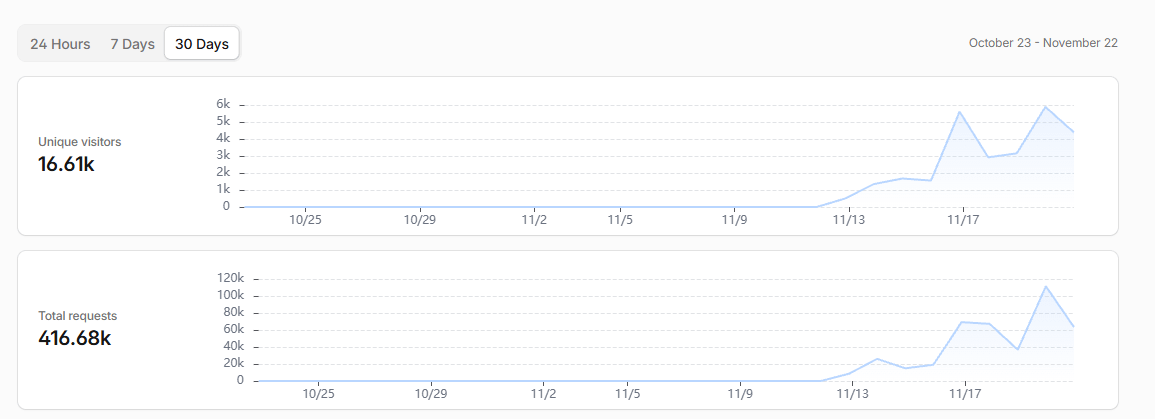
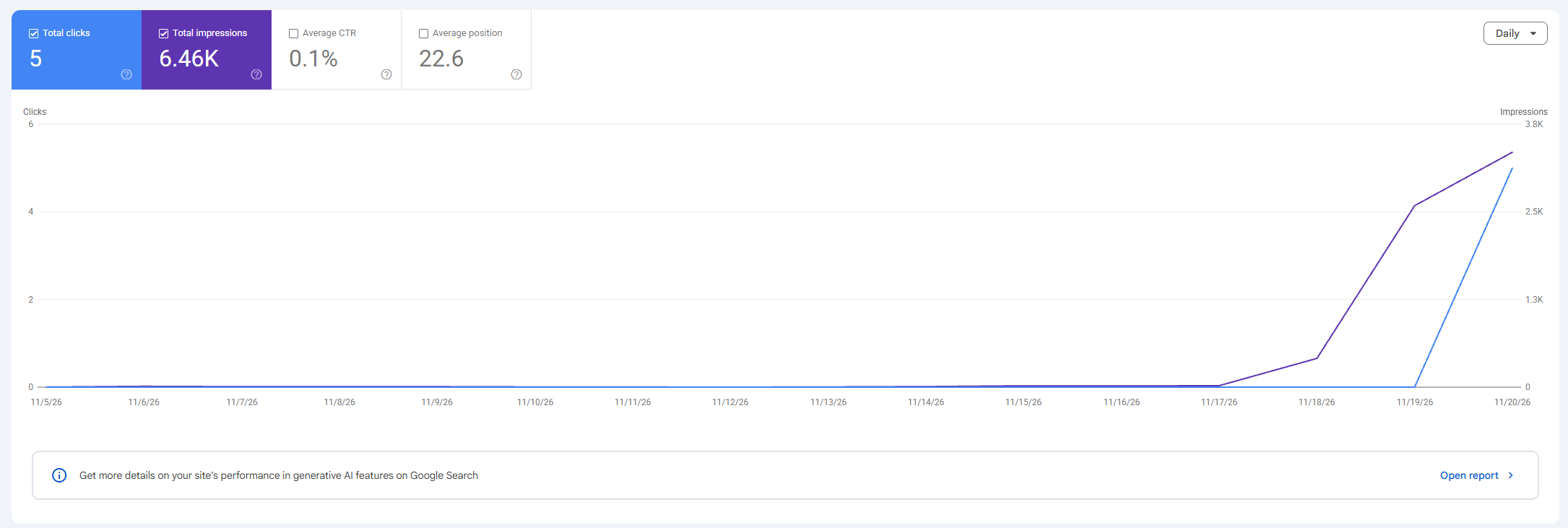

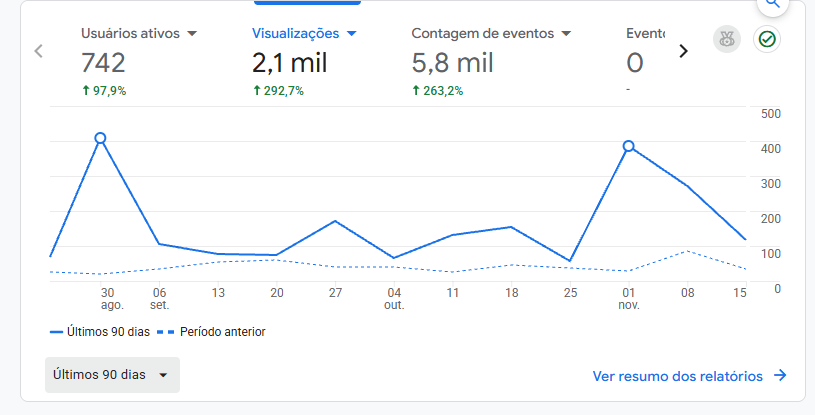
Let’s just say I’ve been making some noise lately.
It’s almost as if I spent three years quietly building the perfect rocket ship, waiting for the right moment to light it up.
When you build out of purpose, the numbers don’t matter. They don’t mean a thing.
You take your time. You build it carefully, piece by piece, until it’s ready to reach the moon.
Like writing a masterpiece of a romance.
SEO is, truthfully, the longest game in all of marketing.
And it’s exactly what made my name with my first American clients.
Back in 2017, almost no one in marketing knew how to promote a CBD lab and manufacturing facility with GMP certification: a place with millions of dollars in machinery and a team of some of the best-paid scientists in the U.S.
Then my mentor and I came along.
We started educating the entire industry through a blog.
And the most-read article of all? Guess.
Autism and CBD Oil.

You can check out Sentient's CBD portfolio below. Just don't call me about it. I'm out of the cannabis industry for good. I made my history there, and I did my part to set the record straight.
Cannabis prohibition was born from racism. Today, people with that same mindset end up in handcuffs.

About the Author
Thiago Patriota


Made in 1996. Born & Raised Brazillian. Bachelor’s Degree in Advertising and Communication. Adept to autodidactism. Curious Soul. Published Author. Founder of Sentient.
That’s me in a nutshell, but you can learn more about Agency at www.agencybrasil.com