


Pandora’s Box
A digest on my latest photos, discoveries and some other things.


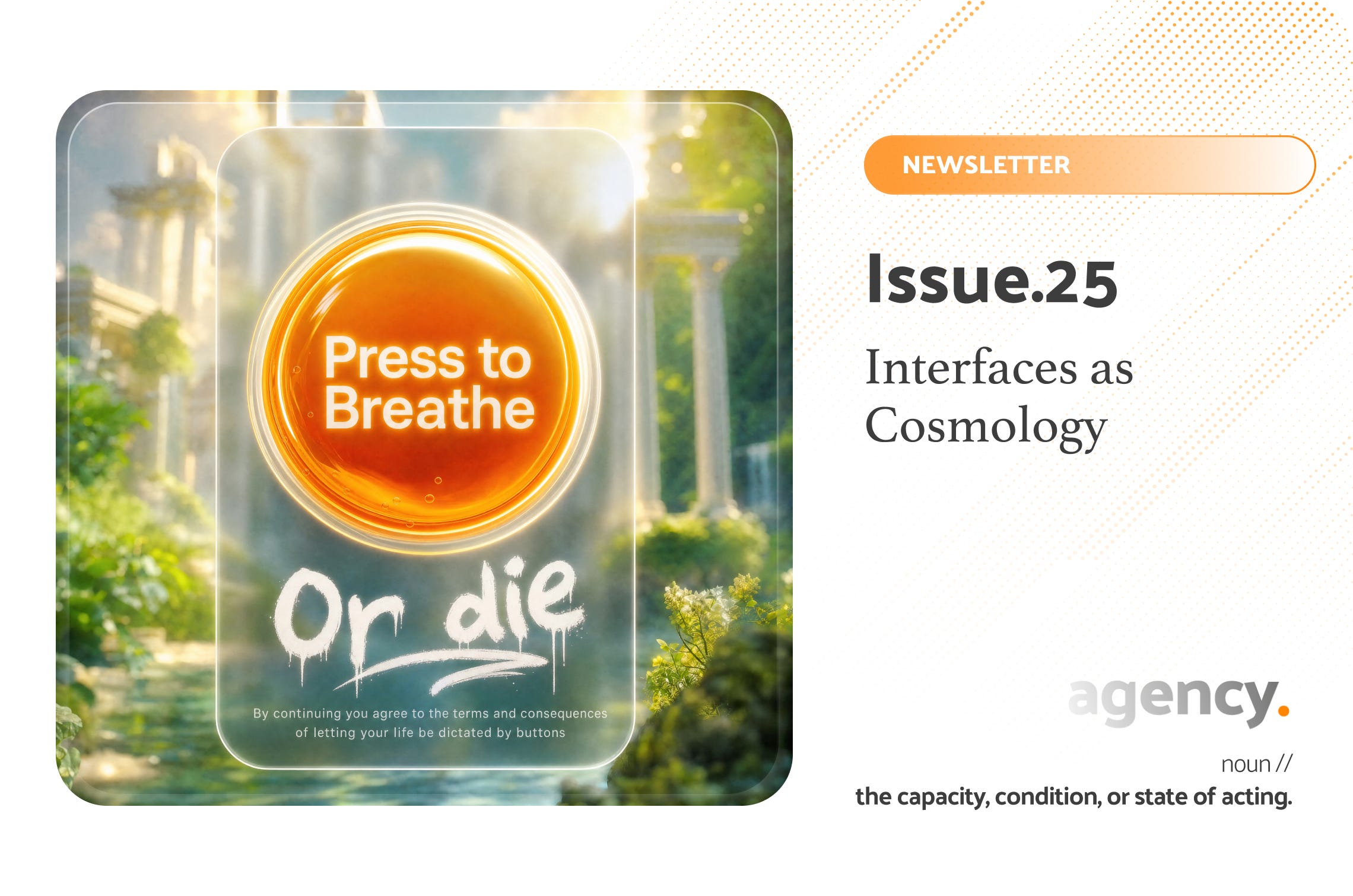
25. Introduction
Hello reader!
It’s been over 2 years since our last issue here at Agency.

I feel like I’ve lost some of the rhythm I used to have when writing these newsletters. (In Brazilian portuguese words: “Perdi a mão…”)
I know 2 years is a long time, but I hope you don’t feel like I ghosted you - ghosting is not cool.
Maybe I was at a loss for words - used way too many of them in previous issues. Maybe I could not afford the time to write my dear audience. Maybe my dad is the only paid Agency subscriber and so feeding the newsletter with more content become unsustainable over time.
But here’s an attempt to get that muscle back.
While making sure my father’s investment is worth his money.
Because this topic can be as much relevant to designers and creatives as it can be to mostly anyone else in the world.
For digital experiences shape the human experiences of today.
We see the world through screens nowadays, like for example, your reading experience of these words. Every single interaction you have with a device is an experience crafted by a human person - systems, fonts, buttons and colors strategically picked to make your experience better.
And so…
Today I caught myself wondering: “How does the craft of designing applications and software shape one’s vision of the world?”
What happens to the mind when it puts itself in a user’s position over and over again? When you have to conceive the actual interfaces, buttons and systems that help people navigate through different tools available today.
A very similar question can also come from any person who deals with internet and modern devices on a daily basis: “How does interacting with screens every single day shapes my way of seeing the world?”
How many screen taps have you made today? How many clicks your mouse… clicked?
Can you live without screens, reader?
If you find yourself lost in the woods with only a BIC lighter in your pockets, can you manage to light a fire for the night without having Google, Siri or AI telling you what to do?
After all, what does it really mean to be dependent on digital interfaces? To do essential life tasks through phones or computers? To just grab the phone and scroll feeds when you are bored? To need wifi in order to get essential survival information.
Nah.
Here’s an even more intriguing question: How far away is society from developing what William Gibson described in his Sprawl trilogy books as “chronic cyberspace addiction”? What happens if we become so absorbed in the digital dimension that we start neglecting our bodies - even forgetting to eat and resenting having to disconnect for basic physical needs?
Is that already happening? Is that about to happen? How does it… look?


Let’s dive deeper into the topic.
25.1 Understanding a Cosmology
What kind of world do digital interfaces teach us to believe we inhabit?
The word cosmology comes from Greek
κόσμος (kósmos) = order, arrangement, the ordered world/universe
-λογία (-logía), from λόγος (lógos) = account, discourse, study, reason
So when we marry that root with the suffix, we got cosmology ≈ “the study of the nature and origin of the universe (or reality)” according to Cambridge.
But much attention here, because the root kósmos, in its older sense means “order” or “odered arrengement” - and so, we get the main question behind this Agency issue: “How digital interfaces help us order and navigate reality?”. Or, less philosophically: “What does putting buttons everywhere do to our Homo sapiens brains?”
Carl Sagan was a famous scientist and cosmologist who viewed human existence through a cosmological lens grounded in science. He spent much of his life trying to figure out where exactly we fit among the stars and planets, like a tiny ant attempting to calculate the dimensions of planet Earth, or Earth itself trying to make sense of its own size against everything else scattered across the galaxy.
Because his lens was grounded in science, every thesis he birthed, had to be explained through formal calculations and logical validations. In his cosmological way of seeing the world, there was no space for religions, magic, myths, gods or unicorns. That’s why he famously wrote in The Demon-Haunted World:
“For me, it is far better to grasp the Universe as it really is than to persist in delusion, however satisfying and reassuring.”
Carl Sagan
I respect that Mr. Sagan, but for me, it sounds boring.
If life was that practical for everybody, we wouldn’t even have time nor find utility in creating cute mythological creatures like Grogu.
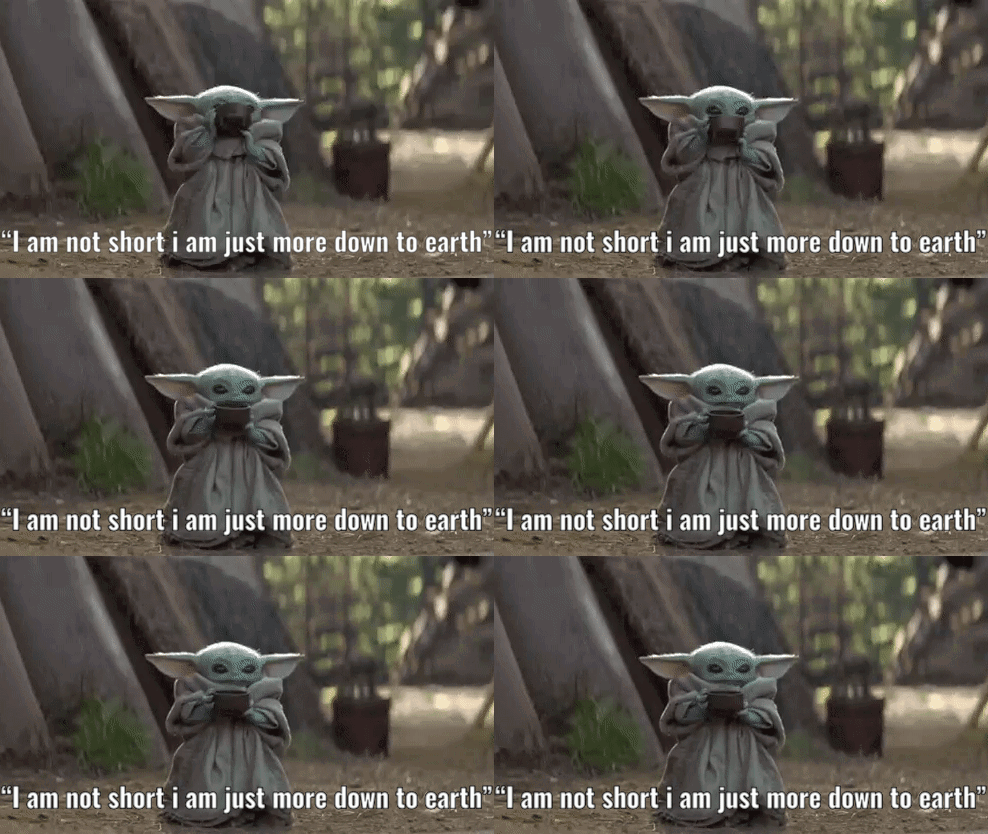
Try living without this tiny kind of wisdom.
On a more serious note…
I’m pointing out to the most important thing to understand about cosmology.
Even if you are a scientist of… cosmology, like Sagan - you will still need your own cosmology to interpret the world.
Even though Carl Sagan studied cosmology professionally, he also approached it through a cosmology of his own: his values, his assumptions, his sense of truth, his own particular lens, his own worldview, his own… cosmology.
Thus, our cosmological perspective of life sits in the root ‘directory’ of how we interpret the world. It shapes what we believe life is, what matters inside it, and what we understand ourselves to be doing here in the first place.
That is partly why different cultures can inhabit the same physical reality and yet navigate life in radically different ways
Christians may seek transcendence through love, faith and sacrifice.
Buddhists may seek liberation through detachment, awareness and the overcoming of suffering.
Hindus may understand life through cycles of birth, death and rebirth, seeking liberation from that cycle through spiritual realization.
Muslims may understand life as submission to God, guided by faith, discipline and moral responsibility.
Taoists may seek harmony by aligning themselves with the natural flow and order of existence rather than trying to impose themselves upon it.
Vikings could enter battle believing that an honorable death might earn them a place in Valhalla, where they would feast, drink, fight, and live among legendary warriors in Odin’s hall.
And a scientific materialist like Sagan, may look for meaning in what can be observed, measured and understood.
Same planet.
Different cosmologies.
Different worldviews for reality.
Believing everyone must interpret existence through the same lens is one of the oldest forms of ignorance. It's like insisting that an Android user and an iPhone user can't talk on WhatsApp because their operating systems are different.
The apps run on different code, the interfaces look nothing alike, but the message still gets through. Different systems don't block connection, they just process it differently.
The same is true for people. Different minds, different operating systems, same underlying capacity to understand each other.
25.2 Understanding Interfaces
And why they are invisible when they truly work.
What could be argued to be one of the first interfaces of humanity can be found in a mechanical device called “Jacquard Loom” - it used replaceable punched cards to control repetitive operations and weave patterns with cloth. This whole system then, was what we consider an interface: a person could program a machine's behavior without touching the mechanism directly.
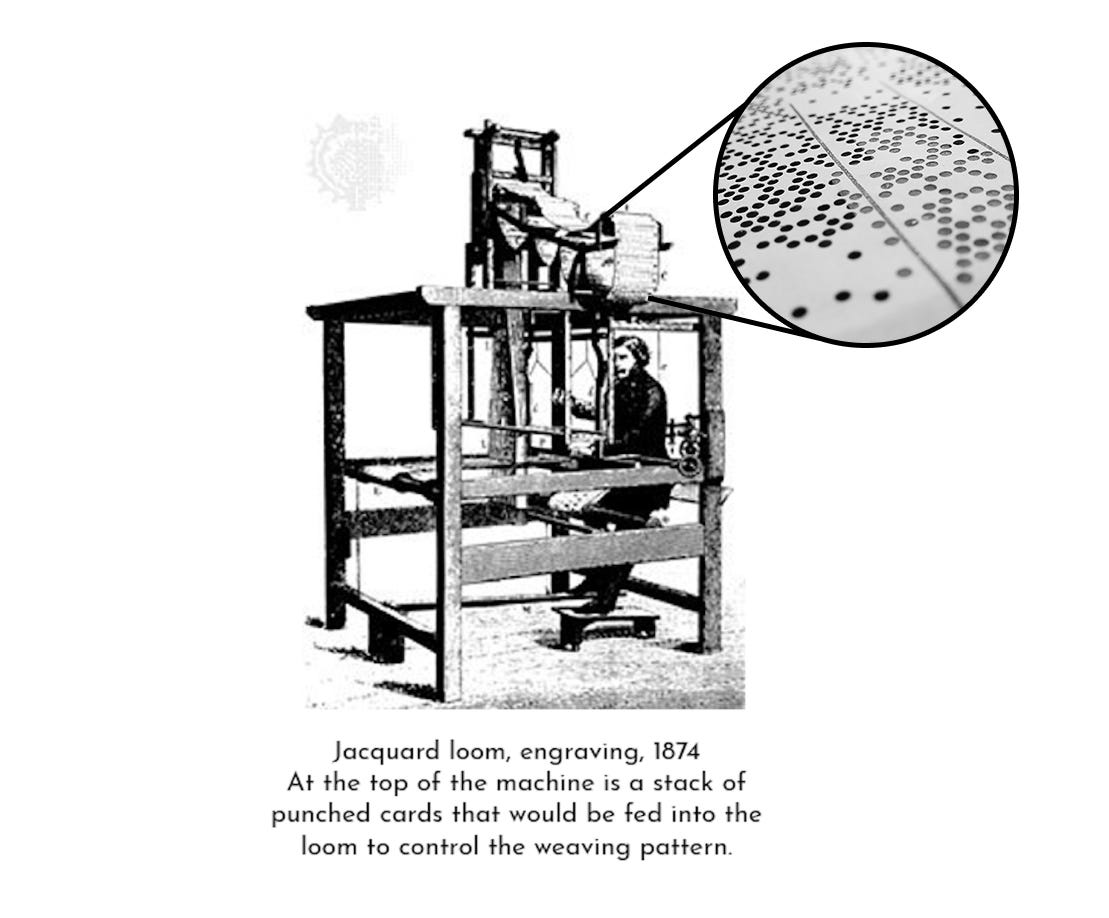
Later on, the Jacquard Loom's punched card system became a conceptual foundation for computing. Charles Babbage referenced it in the design of his Analytical Engine, and Ada Lovelace, writing notes on that design, produced what's now considered the first published computer program, decades before any electromechanical computer existed.
Fast forward to the present. We're surrounded by electromechanical and digital devices that dictate how we live our lives, as if we've become the punch cards ourselves, patterned and read by systems we rarely see the shape of.
There was one particular manifestation of interfaces in between these periods that its worth pointing out. It is a screen that most people has seen at least once in their lives.
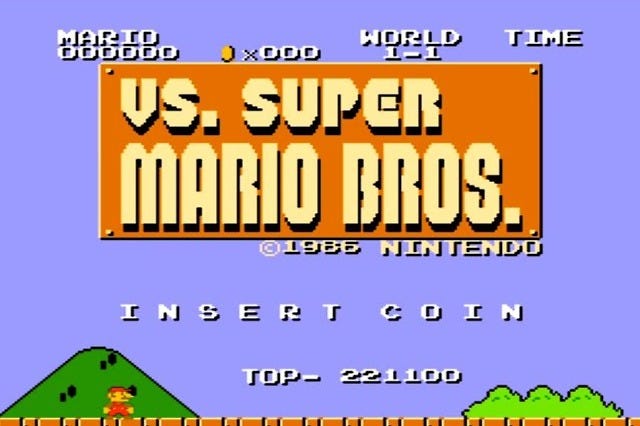
Strangely, we still share a very similar relationship with interfaces from when they were just screens in arcades prompting us to “Insert a Coin” - like when you preview a netflix catalog and before being able to play a movie, you are prompted with: “Subscribe”
Thus, if we are to disconstruct this dynamic… The machine holds something we want (whether it is utility or entertainment), we activate it (most of the times by paying and unlocking it) and then we interact with the interface through a button (by pressing ‘start’).
At a given moment, interfaces surged to help us remove friction from human process, like weaving huge amounts of beautiful patterns into cloth. On that sense, they evolved with miraculous scientific and hard work to automate and accelerate much of our industries and day to day lives - making living easier (frictionless) by helping us drop the needle and letting the machines do the hard work (produce) for us.
But something happened along the way, the interfaces turned against us! Their practical utility and engineering features started being gatekeeped by a threshold: “If you want permission to use me, do X”.
Take Instagram, for example. Try to view a profile without an account and after a few seconds the screen locks: 'Log in to see more.' That's basically 'Insert Coin' wearing a different currency. But the real threshold isn't the login wall, it's the algorithm itself. To actually be seen on the platform, which is the whole utility we showed up for, you have to feed it engagement (likes, comments, watch time, consistency) and hand over your privacy along the way.
The old machines at least told you the price. Drop a coin, get a life, simple as that. These new ones don't tell you anything. You end up performing for a reach you can't measure, against a rate the machine never publishes, one it quietly monetizes through ads.
Well reader, sorry to break the news… but Tyler Durden said it first.
The things you own, end up owning you.
- Chuck Palahniuk, Fight Club
Hence, devices and interfaces are everywhere in our personal and professional lifes nowadays, they bombard us with buttons and cool utilities that comes with a price tag - but one thing has fundamentally changed: we made them to remove friction but unlocking their use became the actual friction we so desperately need to get rid off.
Phew, I feel my card punched just by writing that previous paragraph.
And you might laugh about the ambiguity of that last sentence, but you know that your credit card might be punched by my interfaces as well. Hehe
And so, like we Brazilians usually do in the face of tragedy… we all laugh, but then we remember how many buttons we need to press in order to cancel that one subscritpion we don’t use anymore - and then we hold hands and cry together.
Not because we will still have to press more buttons in a life imprisioned with buttons…
But because starting the subscription only required us to press one button.
And cancelling it is where the friction finally comes home with tenfold of buttons.
Booyah.
25.3 Marrying Empathy
And how making good design comes from a commitment with empathy
I gotta be honest, I swapped horses midstream in the previous topic.
I meant to get technical and explain how Interface Design works but the grumpy old man in my 30 years of age took the opportunity to approach interfaces as cultural and philosophical history - just so I could punch Zuckerberg’s card.
Guilty as charged. (Him, not me. I'm just the witness with a grudge and a metaphor).
Getting back on the horse…
There is an entire field of study that specialize people in designing interfaces, it is called User Experience Design.
In Design.2 - Demystifying UX/UI Design Pt.1 I have explained the fundamental concepts behind this field of study and painted a clear picture between the differences of a consumer and a user - all of us are both nowadays.

But here’s what I haven’t talked about before…
Shoes.
We usually translate the capacity/virtue/skill of empathy through the popular expression: “To put yourself in someone else's shoes”
And that is the fundamental thing every kind of artisan or designer needs in order to excel in their craft.
Because before you can design anything for someone, you have to walk where they walk - because you are actually paving the road.
In that sense, empathy isn't a soft skill you sprinkle on top of the craft. It's the material you build with. You can have flawless technique, brilliant typography, elegant code, a beautifully engineered sole, and still produce something that fits nobody, because you designed it for a foot you never bothered to study or observe.
And so we get to the main topic of this issue.
The curse of having to put myself in the shoes of as many people as I can possibly imagine.
If nowadays we don’t see even religious people doing that, why should I do that for professional work?
Enough. I quit.
*Drops the article and go for a walk
Nevermind, I just rehired myself again.
Cause with the Marketing of Autonomy, I’m the CEO of my own life.

And I love putting myself in other people’s shoe.
Even though some shoes are way too big, others are quite small and some are even smelly.
There are all kinds of feets and if you can’t understand that as a designer…
Try another profession mate.
Because not all humans care about cultivating empathy.
And perhaps that’s fine, because that’s the shoe they live in…
But real design affords no such luxury.
Truthfully, anyone can put themselves in other people’s shoe.
You just need a little imagination.
But how exactly do you tap into someone’s… cosmology?
Easy. Read Agency.
Or…
Cultivate the heart (or craft) of a human-centered designer.
In fact, I came across this new term in the internet sometime ago, never managed to forget about it.
“Super Empath”
A super empath is a popular psychology term for a person with intense emotional sensitivity who has learned to set firm boundaries and spot manipulation
Although there is usually nothing ‘hero’ about being ‘super’ in something
There is in fact, heroic work to be done through design.
Because as I said in the past…
When things don’t work in the present, a new future needs to be designed.
And there is absolutely no point in designing a future only for yourself.
In a planet with so many feet.
But attention, younglings, wannabe designers, newbie designers and maestro designers…
When you do that for long enough, the capacity evolves to “super” and eventually lands to “chronic” (deeply habitual) - which is also a term that is usually used for diseases.
Perhaps “super” is also a disease.
Look at Batman…
That poor super hero dude saves every single day in Gotham City but always end up alone in his batcave.
Does he only punches the villains or also those who try to befriend him?
I think we can all agree - It’s not normal to dress yourself as a bat.
Specially if you could dress as a beautiful white segaull…
That’s some complex diagnose right there: contemporary urban gothic marvel-lous depression.
Anywho… I digress because I don’t want to talk about my disease.
I don’t want to face the truth!
I can’t take it anymore.
I need to go after some medicine or injection in my buttocks.
I need to publish this article without a faithful, obsessive and torturous review of my grammar.
I need to get rid of the need of making your reading experience… PERFECT!
And if it don’t work… I’m doomed.
I’m doomed to simulate your reality in some corner of my mind.
Doomed to remove all the frictions of your life.
Doomed to imagine myself in your shoes and wander through your fears, desires, dreams, meanings, cosmology and, inevitably… your smelly feet, reader.
And there is nothing you can do about it.
Booyah.
About the Author
Thiago Patriota

Chronic empathy patient - currently under treatment and too sick to actually write yet another bio paragraph.